
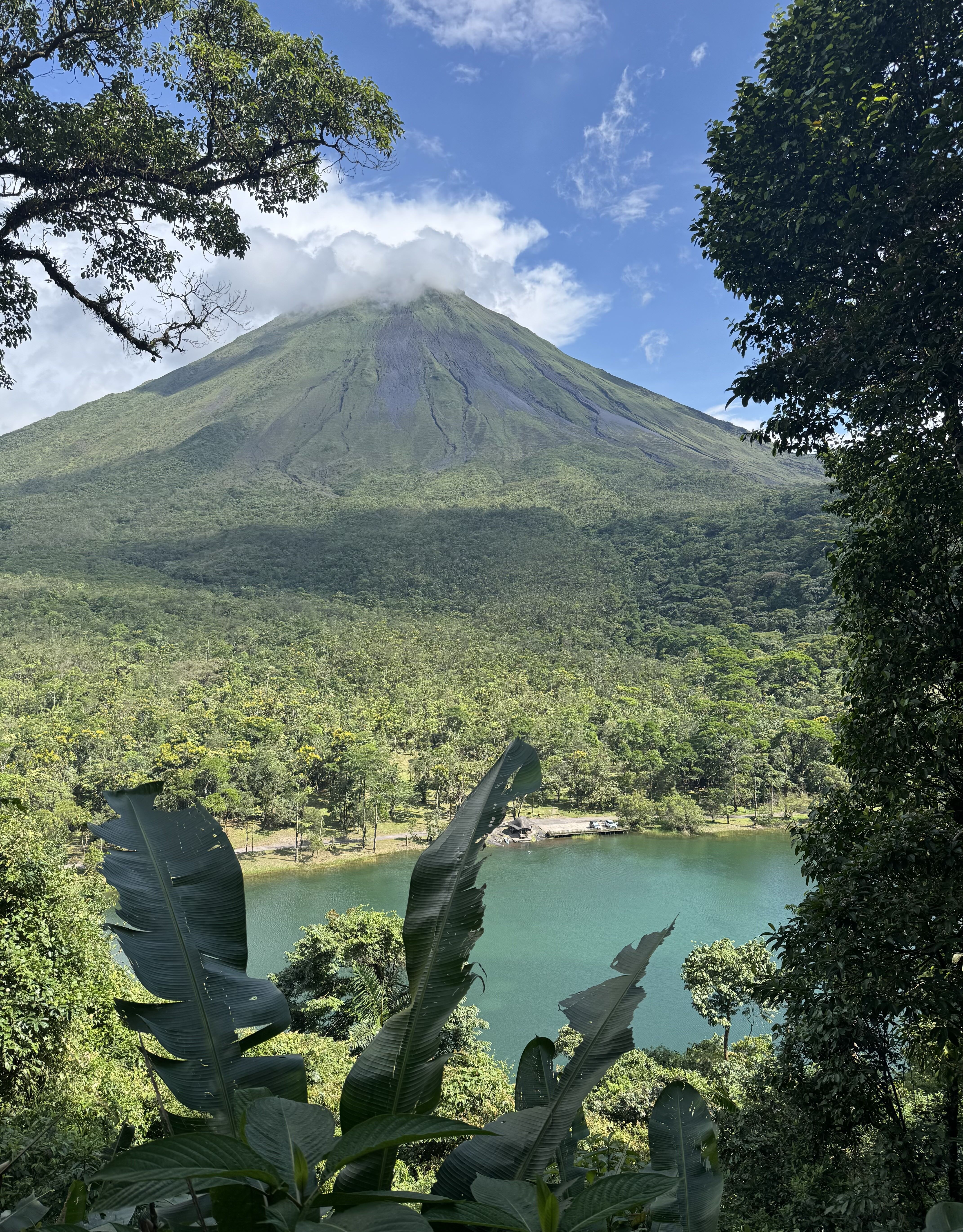
In my five weeks studying abroad at Universidad Veritas in Costa Rica, I learned the principles of Health and Psychology, a course meant to discuss the epidemiology of mental disorders as we know them today, and equip students with the knowledge they need in order to apply the best practices towards improving their wellbeing.
 Our professor met with our small and intimate class of approximately ten students from 3-5 p.m. every Monday through Thursday during our program. Her non-traditional instruction was an incredibly positive experience in my recollection of the course as a whole. To paraphrase, my professor believed it was becoming more and more typical for my generation to avoid committing to any concentrated direction in their studies, citing conversations she’s had with psychology students about what occupations they are thinking about pursuing. Her sneaky solution to this dilemma in our class was to allow us to assign ourselves topics we would essentially “marry” (commit to, if you will) from the start of the semester going forwards, and that topic would become our directed focus of research as we went on to deliver three separate presentations to our class about what we have learned in our examination of various sources.
In Costa Rica, the classroom was an open and engaging environment, where every student had curiosity, or, in some cases, insight, to offer about the topic being presented. Our professor guided us not only in learning what there is to know about the intersection between health and psychology, but also how to speak and utilize presentational skills to convince others that we know about health and psychology. Each student in the class was empowered to behave as trusted communicators of vital information. In a non-traditional college classroom, which is very often found outside the walls of Western institutions, it is the students who are the ones leading activities, and they collaborate with each other to produce a shared, holistic knowledge about the course material, rather than the professor resorting to lecturing a silent classroom for an extended period of time.
Professors, in the non-traditional classroom environment, may use parables from their work outside of academia to inform students about the applicable skills they will learn through immersive learning, and often communicate with students one-on-one in order to bridge learning gaps when discussing complicated questions. The complicated questions are often the most important to understand. To what degree does the brain act independently of the body? What is the biological and social basis of our emotions, ranging from contentedness to chronic stress? How will the field of psychology evolve as our cultures and societies are ever-changing? At Universidad Veritas, we tackled these incredibly important things to ask ourselves as global scholars in our field of study.
My classroom experience made me think about the privilege I have to be part of the voices responsible for speaking up in the name of psychology, education, and study abroad altogether. In Health and Psychology, I married the topic my professor called “Schools of Psychology”. It took me down the route of researching the history of social science, different types of psychological therapies, and approaches to treating personality disorders. Had I not gone abroad, I wouldn’t be as diligent and effortful in my pursuit of knowledge as I am now, and I am more inclined towards exploring the field of counseling psychology after finding my topic to be quite interesting. Going abroad is really the experience everyone hails it as, but if anything should persuade a student to go abroad, let the emphasis rest on the classroom’s ability to contribute to your personhood as, by far, the most enthralling thing about being a citizen of the world.
Blog by Cassian Gerasimenko, Northeastern University
Learn more about CIS Abroad programs in Costa Rica here!
Related Posts
Travel Tips for Your Semester in Australia
How My University in Australia is Different