
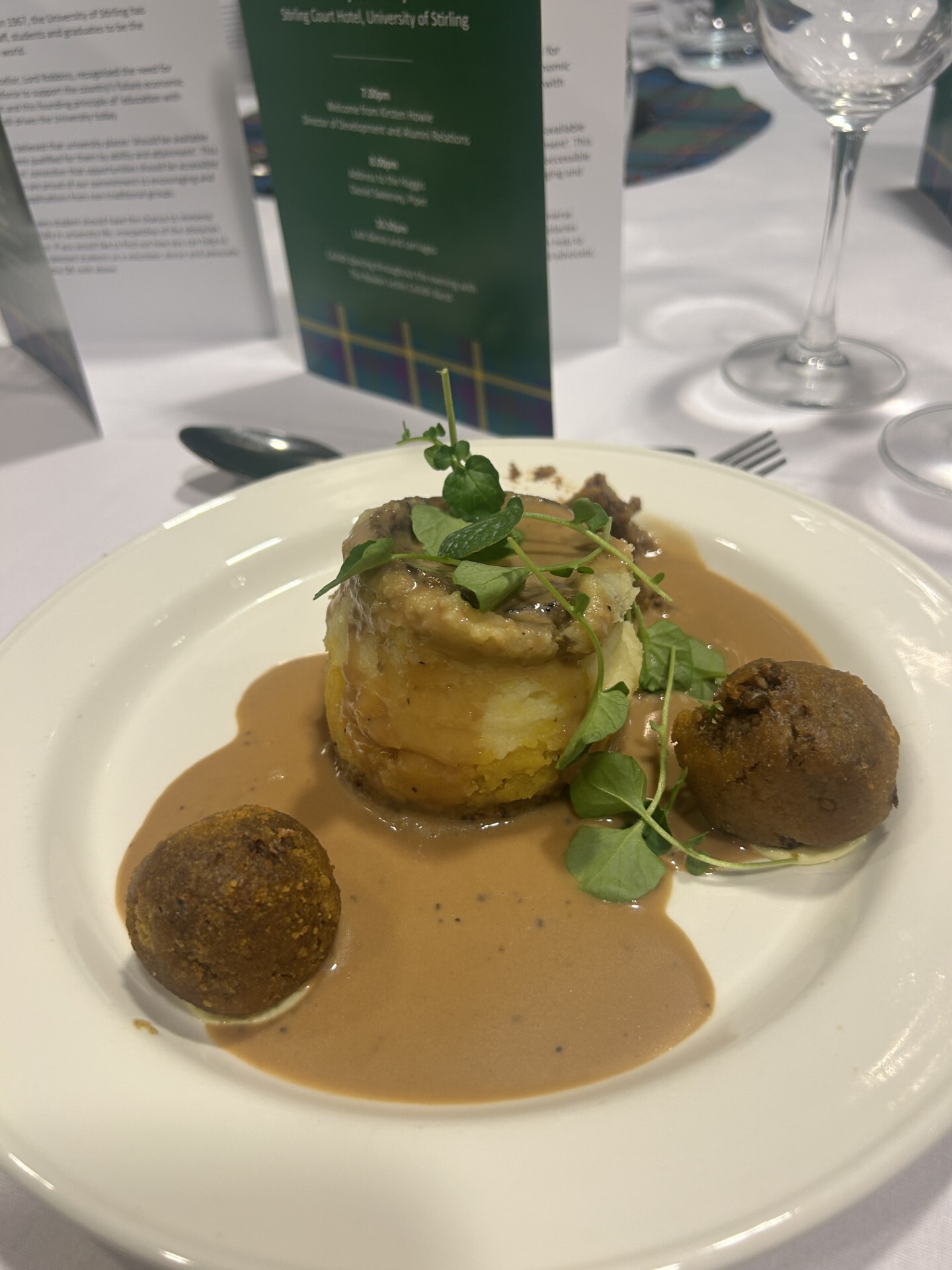
When most people think of Scotland, their minds go to tartan kilts, bagpipes, and dramatic Highland landscapes. But ask anyone who’s visited, and they’ll probably tell you about a commonly misunderstood dish: haggis. For many, the name alone sparks hesitation. Add in the traditional description of what’s inside, and it’s no wonder visitors get nervous. But after trying it myself, I can confidently say that haggis deserves far more appreciation than it gets and it is honestly the food I miss the most from my time abroad.
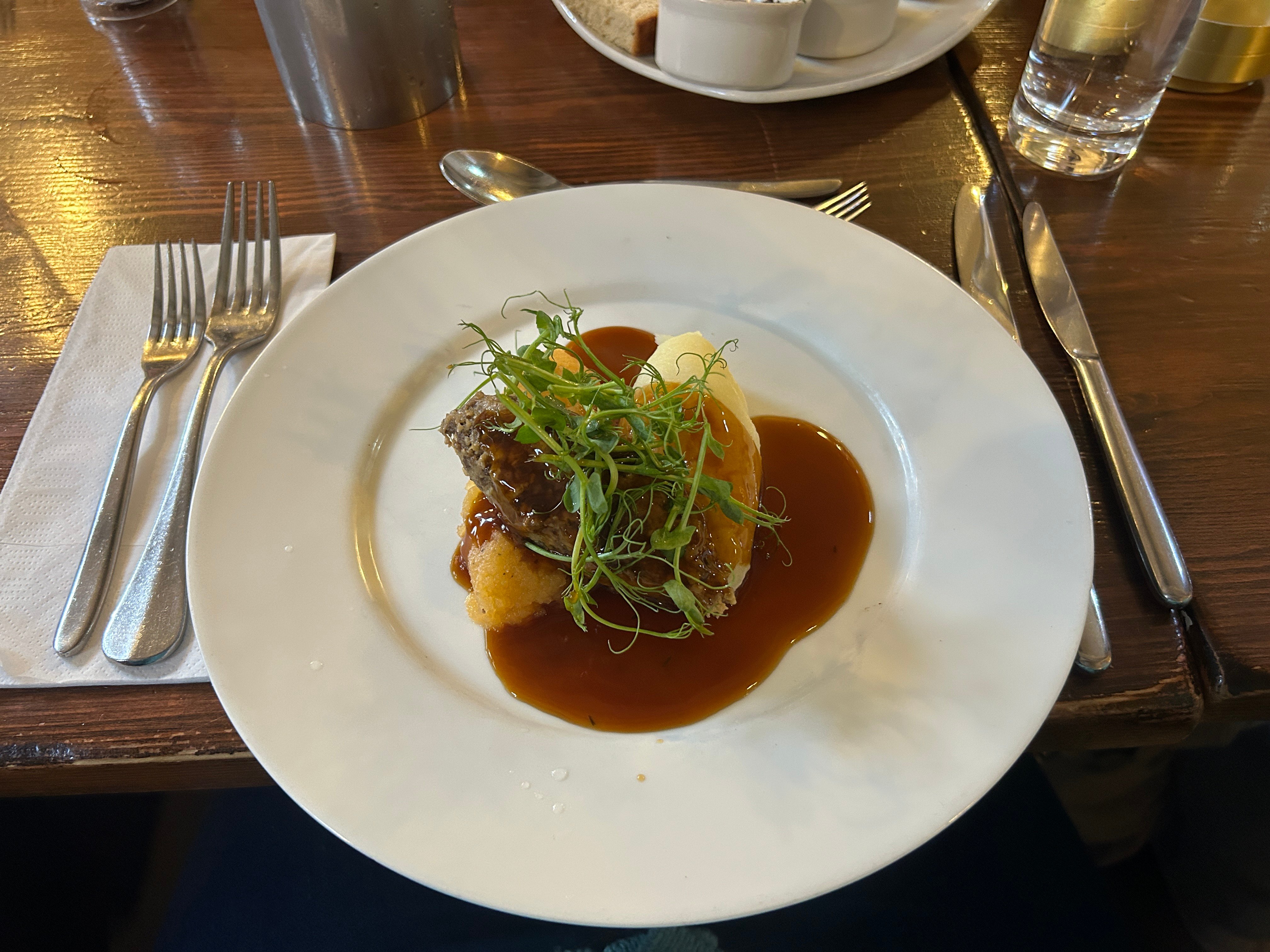
So, what exactly is haggis? Traditionally, it’s made from “lamb’s pluck”, a mix of the sheep’s heart, liver, and lungs. It’s blended with oats, onions, suet, and spices, then encased in a sheep’s stomach or replacement casing. For those unfamiliar with this style of cooking, it sounds horrifying. But the truth is haggis is not only not disgusting, it’s one of the most comforting, well-seasoned dishes I’ve ever tasted. The first bite completely erased any doubts I had, and while I was there, I insisted on finding someone to teach me to make it.

The traditional way to serve haggis is over “neeps and tatties,” which is Scottish shorthand for mashed turnips and potatoes, respectively. Together, all three elements really balance each other out. I’m not a huge fan of turnips myself, but I did enjoy it as a part of the dish. But haggis isn’t limited to just the traditional presentation. During my stay, I discovered that Scots have found clever, creative ways to enjoy their national dish.
One favorite variation was haggis bon-bons: crispy little bites of haggis rolled into balls, breaded, and fried. These are the perfect appetizers. Another standout was haggis served over chicken, often called “Chicken Balmoral.” The tender chicken breast paired with haggis and topped with a creamy peppercorn sauce was nothing short of amazing. I had it served this way on my 21st birthday and it was a perfect choice.
Speaking of sauces, I quickly learned that haggis is almost always paired with something to enhance its flavors even still. Two of the most popular options are peppercorn sauce or a whiskey gravy. Both add something that just ties the whole dish together. Personally, I found whiskey gravy to be my favorite. By the end of my trip, what started as pure curiosity to try an “out there” dish became one of my all-time favorites. What makes haggis so special is not just its bold, comforting taste, but also the cultural pride behind it.
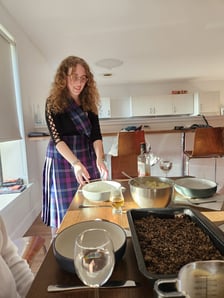
For Scots, haggis is more than food, it’s tradition, history, and identity, often celebrated on Burns Night in honor of poet Robert Burns, who famously praised the dish in his poem “Address to a Haggis.” Which is commonly read out loud with much bravado at Burn’s Night celebrations. So, if you ever find yourself in Scotland, don’t let the reputation of haggis scare you away. Take a bite, and you might just find yourself as pleasantly surprised as I was. For me, haggis is an easy 10/10, and a dish I’ve added to my own recipe book back home.
If you're interested in exploring more of Scotland, check out all of CIS Abroad's available programs here!
Blog by Caitlyn O'Dell, Ithaca College
Related Posts
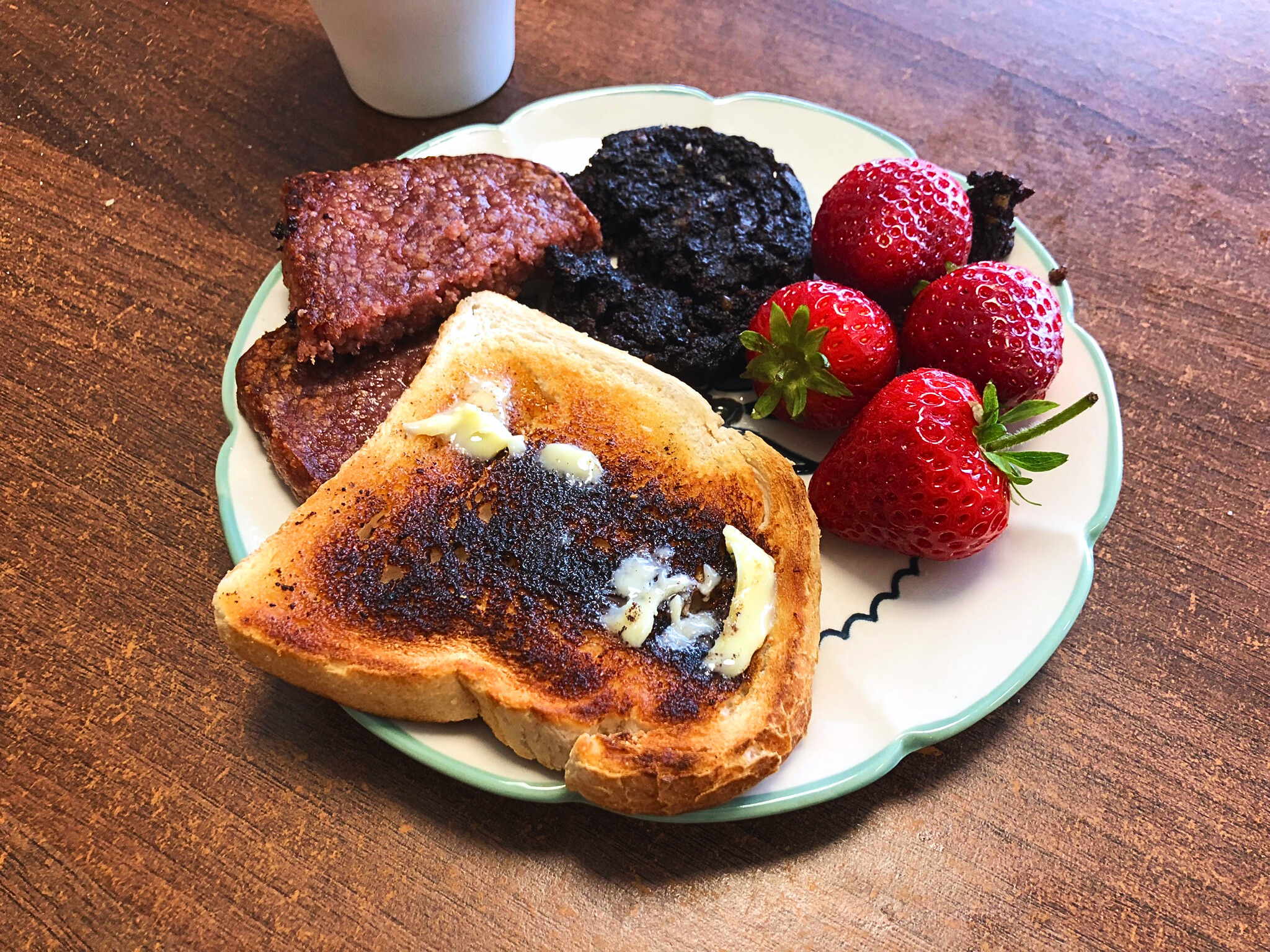
My Favorite Foods From Scotland
.jpg)
Why Scotland is the Best Kept Secret